
寺 廟 与 神 靈
TEMPLES & DEITIES
Introducing the 11 temples & their main deities.
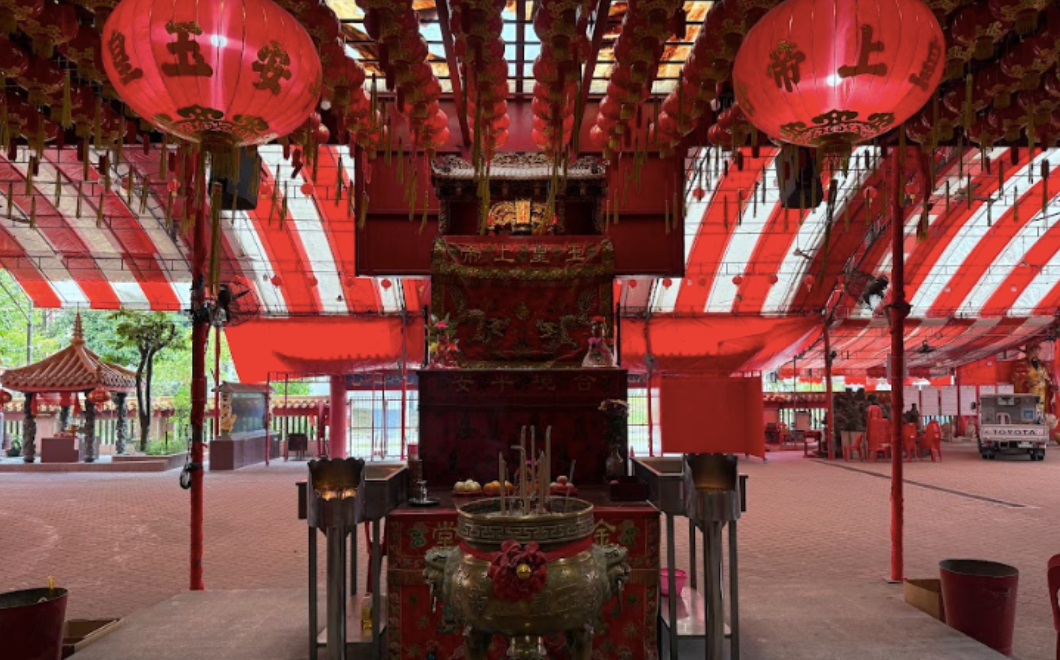
Tian Gong Tang
Brief Record of the Teng Kong Altar’s Integration into Tampines Chinese Temple
The Heavenly Lord, respectfully known as the Jade Emperor, is deeply revered among Chinese communities. In the early days, Chinese settlers often erected traditional “Tengkong Altars” (Heavenly Lord Altars) in the countryside to worship the Jade Emperor. However, due to national development policies and land relocation, many temples and devotees who worshipped various deities were compelled to move or cease their activities.
Hence, with the consent and cooperation of the temples involved, the Tampines Combined Temple was established, incorporating the Tengkong Altar as part of its structure under the devotion of the Jade Emperor’s followers.
When the first Tengkong Altar General Assembly convened, it was during a period when government land acquisition was taking place. After careful discussions and multiple meetings between the representatives of the two Tengkong Altars and the temple’s management committee, it was unanimously agreed—with government approval and the support of the community—that the altars would be merged into the Tampines Combined Temple.
Since its establishment, the devotees of the Tengkong Altar have continued to uphold the ancient traditions and rituals of the historic Tengkong temples, faithfully offering prayers for peace and prosperity of the nation. Even today, this tradition is preserved—each year, a grand Tengkong Prayer Ceremony is held to express devotion and reverence, beginning at 7 a.m. on the 9th day of the first lunar month.
Main Deity:
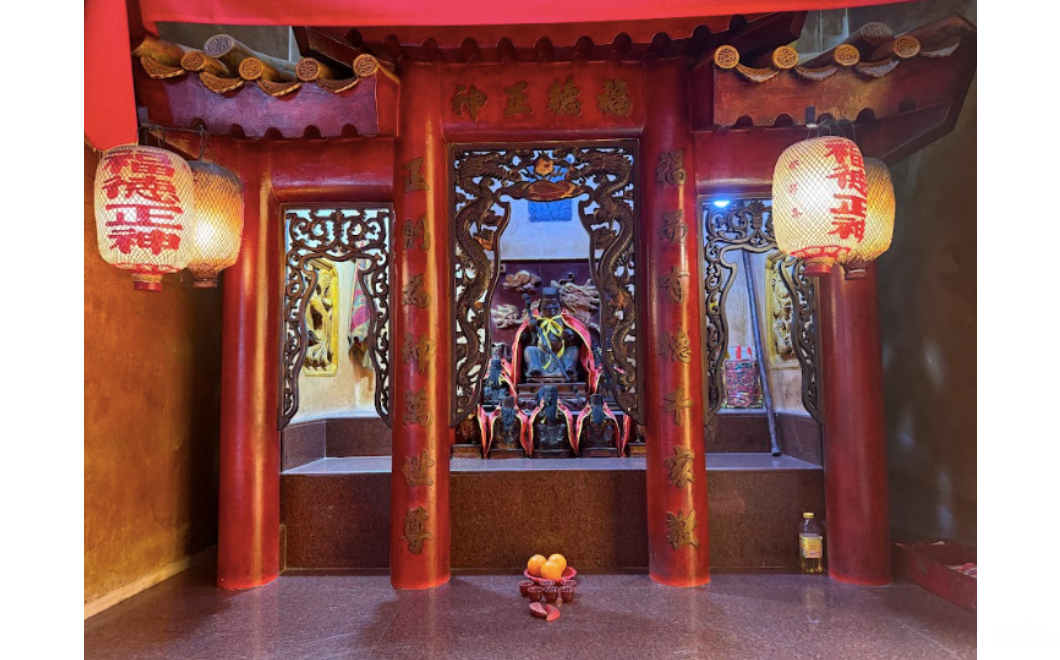
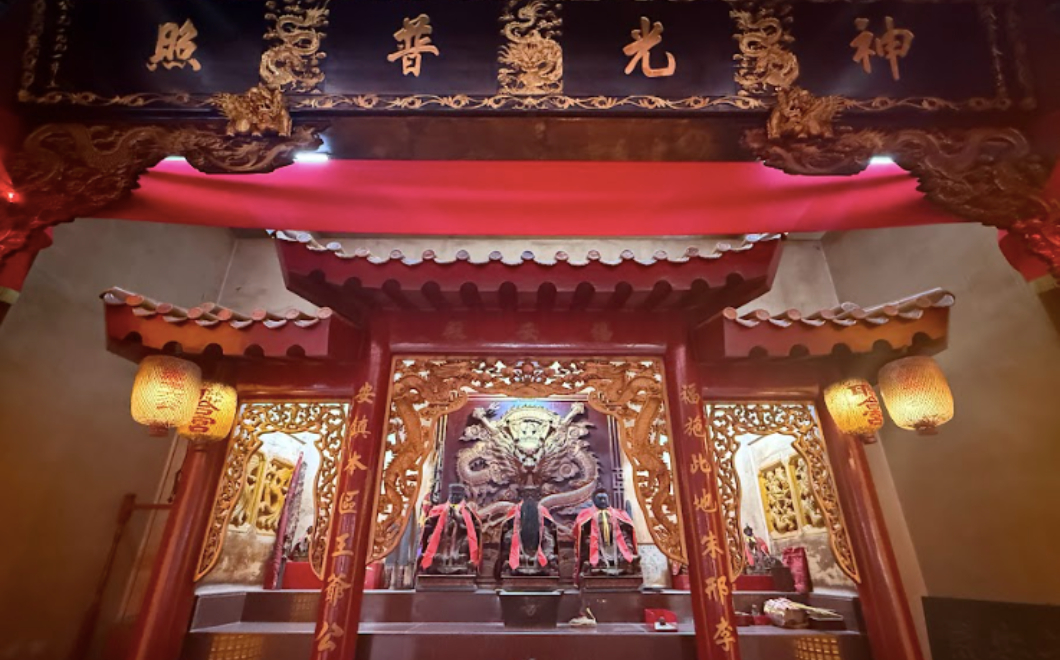
Hock Ann Dian
Introduction to Foo An Dian (Hock Ann Temple)
During the Japanese Occupation of Singapore in 1943, a villager named Mr. Lim Chee Huat (林池发) from Tampines 11½ Milestone (commonly known as Sam Yat Lik) began worshipping Zhu Tian Da Ren (朱天大人) at his home.
At that time, the region was plagued by unrest and instability. With hearts filled with anxiety, Mr. Lim prayed earnestly for divine protection over his family and community — for peace, harmony, and favourable weather.
Thus, a simple attap-roof shrine was established. Mr. Lim took responsibility as the caretaker and temple host. When the spirit of Zhu Tian Da Ren descended and manifested through the altar medium, the deity’s power and blessings became widely recognized. Local villagers began visiting to seek divine guidance and protection, and the number of devotees gradually increased.
As the land on which the shrine stood was leased property, the temple had to be dismantled after the lease expired. Devotees, unwilling to lose their place of worship, temporarily enshrined the statue of Zhu Tian Da Ren in a nearby wooden house and continued their prayers there.
The original temple was situated beside three small rivers, surrounded by coconut groves and paddy fields, creating a tranquil and scenic environment. According to accounts, Zhu Tian Da Ren’s divine power was extraordinary, and countless devotees’ prayers were miraculously answered.
Due to the growing number of followers, the villagers collectively raised funds in the 1950s to rebuild the temple. However, as the land remained under temporary lease, the deity continued to be worshipped in the same modest premises.
In those early years, villagers affectionately referred to the temple as Zhu Tian Da Ren Gong (朱天大人宫). Each year, on the 10th day of the 10th lunar month, a grand ceremony was held to celebrate the deity’s birthday. Rituals such as divine consultation (bua pueh), blessing prayers, and peace offerings were conducted to seek protection, prosperity, and harmony. At that time, the temple charged a small symbolic rental of 30 cents per day, and devotees could book the space for a maximum of three days. This practice continued until 1979, when the rental arrangement was discontinued.
Originally built from timber, Foo An Dian underwent reconstruction in 1974 under the supervision of Mr. Lim Chee Huat. The rebuilding cost approximately $30,000, transforming the structure into a sturdier concrete shrine.
When the government began developing Tampines New Town in 1979, the temple land was acquired for redevelopment. In 1982, the temple was relocated to the newly constructed Tampines Combined Temple, where the statue of Zhu Tian Da Ren and the devotees were formally enshrined together with other deities.
Importantly, the original Foo An Dian temple door was preserved and remains a part of the temple today. A new statue of Zhu Tian Da Ren was also consecrated, as the deity’s divine manifestation was said to be especially auspicious.
In 1986, a special Foo An Dian Sub-Committee was formed under the Tampines Combined Temple, comprising:
Mr. Lim Chee Huat, Mr. Ng Seng Long, Mr. Chua Chuan Chun, Mr. Chua Quan Ya, Mr. Chua Kwang Yi, Mr. Lee Tian Swee, and Mr. Lee Keng Chun.
The sub-committee was officially integrated into the Tampines Combined Temple on 9 July 1986.
That same year, on 28 June (Lunar Calendar, Sixth Month, 28th Day), a ceremony was held to mark the relocation of the Foo An Dian deity into the temporary temple premises of the Tampines Combined Temple.
Each year, on the 10th day of the 10th lunar month, a grand celebration continues to be held in honour of Zhu Tian Da Ren, featuring traditional rituals and thanksgiving prayers for divine blessings.
When the Tampines Combined Temple Grand Consecration Ceremony was held on 5 November 1991, the statue of Madam Lee, the consort of Zhu Tian Da Ren, was formally enshrined in the temple’s main altar — signifying the unity of divine presence and continuous blessings upon all devotees.
Main Deity:
Temple Subcommittee:
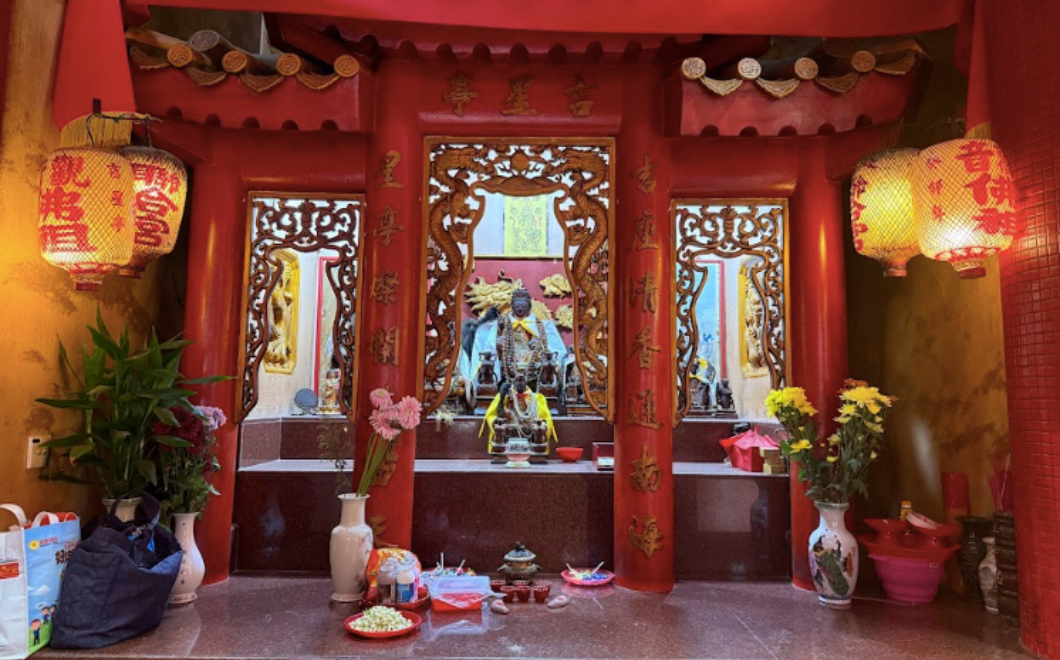
Ji Xing Ting
Ji Xing Ting (Auspicious Star Pavilion) – Introduction
Many decades ago, a Burmese devotee brought with him three sacred statues of the Goddess of Mercy (Guanyin Bodhisattva) to Singapore and enshrined them at his residence in Lam Lake (Lin Hu) Village, within Paya Lebar (Bak Ku Li Ta area, Chulan Hong Qing).
The temple began as a simple attap-roof shrine, later expanded around 1918 into a zinc-roof structure. From then on, the temple held annual celebrations from the 18th to the 20th days of the 2nd lunar month, marking the Birthday of the South Sea Guanyin Bodhisattva.
During these days, devotees offered thanksgiving prayers and staged traditional puppet shows to honour the Goddess.
Growth and Succession
After the Japanese Occupation ended in 1945, Singapore was liberated, and the British forces returned. In 1946, the temple’s founder passed away, and his son, Mr. Lim Tong Poh, succeeded him as the new temple caretaker.
Under his leadership, the temple expanded its activities and popularity. On the deity’s holy days, the temple began hosting Hokkien opera performances in place of puppet shows. These annual celebrations attracted large crowds — men, women, and children from surrounding villages came in droves to offer incense and prayers, turning the festivities into a grand local event.
In 1973, upon the passing of Mr. Lim Tong Poh, his son Mr. Lim See Seng inherited the responsibility of overseeing temple affairs.
Relocation and Establishment in Tampines
In 1982, due to the government’s expansion of Paya Lebar Airport, the temple’s land was acquired for redevelopment. With time running short and no immediate site available for rebuilding, the statue of the South Sea Guanyin Bodhisattva was temporarily relocated and enshrined at Ann Hock Temple (An Dian) along Jalan Fochow for five to six years.
Subsequently, Mr. Chua Kian Heng and Mr. Lim Hu Bao liaised with other temple leaders from the Tampines area to form an association. Together, they approached community leaders to acquire a new plot of land, eventually joining the Tampines Combined Temple organization.
Mr. Lim Hu Bao continued serving as the temple chairman of Ji Xing Ting, with his sons — Lim Cheong Huat (eldest), Lim Khun Yam (second), and Lim Cheong Boon (youngest) — assisting in temple management and rituals.
On 3 July 1986, Ji Xing Ting officially moved into the temporary premises of the Tampines Combined Temple.
Finally, on 5 November 1991, the temple was formally consecrated and enthroned within the Tampines Combined Temple, marking a new chapter in its long and blessed history.
Main Deity:
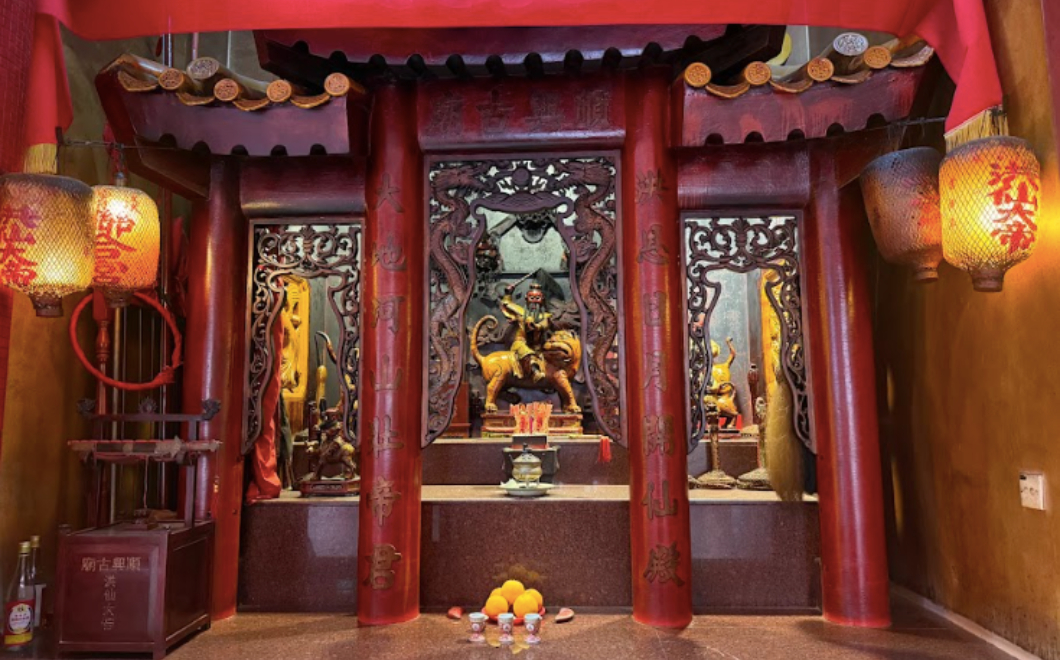
Soon Xing Gu Miao
Shun Xing Ancient Temple – Hong Xian Da Di
Long ago, before Tampines became developed, the area was covered by dense forests and scattered rural villages. According to local legend, one day a villager went up the hill to collect firewood when suddenly a fierce tiger appeared before him. The animal bared its teeth and leapt forward to attack. Terrified, the man pleaded for his life, promising to bring it offerings from the village below if it spared him.
Surprisingly, the tiger stopped its attack and followed the villager down the hill. When the man reached his village, he reported the strange encounter to the village head, who ordered that a pig’s head be offered to appease the creature. However, when the offering was prepared and brought to the site, the tiger had already vanished — leaving only tufts of grey fur scattered on the ground.
Soon after, the village head dreamt of a divine being who revealed that the tiger was in fact a manifestation of Hong Xian Da Di (Great Emperor Hong Xian). The villagers then built a small shrine at the spot to worship him, marking the beginning of what would later become the Shun Xing Ancient Temple.
Origins of the Temple
In the years that followed, villagers reported seeing a spirit riding a white tiger in the area, which they believed to be Hong Xian Da Di. Out of reverence, they constructed a proper temple and named it Shun Xing Gu Miao (Shun Xing Ancient Temple).
In local Chinese folk belief, Hong Xian Da Di is a divine protector and healer, revered as a deity of medicine and compassion. He is said to cure the sick, ward off disasters, and bring peace to those who pray sincerely.
In 1851 (the first year of Emperor Xianfeng), a devotee named Chen Chen Qing from Shao Ping, Si Zhou Township (present-day Fujian Province) rebuilt the temple in gratitude for divine protection, dedicating it to Hong Xian Da Di.
By 1883 (Guangxu 9th year), most villagers in the area were immigrants from Yongchun, Fujian, who firmly believed that Hong Xian Da Di had safeguarded their journey and settlement in Singapore. Out of gratitude, they rebuilt the temple and continued the worship with deep devotion.
It is said that over seventy years ago, the deity descended and revealed his presence near a banyan tree in the village. He instructed devotees to set up an altar at that location for prayers and offerings. The faithful followed his command, rebuilt the temple, and sculpted a new golden statue of Hong Xian Da Di, which was then ceremonially consecrated.
Growth and Devotion
By 1934 (Republic Year 23), the temple community began organising grand processions and celebrations for the deity’s birthday, which is observed annually on the 21st day of the 11th lunar month. On this day, devotees hold elaborate rituals for peace, blessings, and protection, and the temple is filled with vibrant incense offerings and festive joy.
Each year on this sacred day, villagers prepare offerings and perform thanksgiving ceremonies in honour of Hong Xian Da Di. The temple’s incense has never ceased, and it continues to be a spiritual centre for countless devotees.
When caretaker Mr. Lim Si Sheng passed away in 1935, the temple management was succeeded by Mr. Tan Yi Ming. After Mr. Tan’s passing in the 1970s, his responsibilities were taken over by Mr. Tan Ju Zhen and his wife, who diligently managed the temple’s affairs.
The temple leadership was later joined by brothers Mr. Tan Bai Nian and Mr. Tan Jin Bin, who continued to oversee religious activities and maintain the temple’s operations.
In 1968, the original statue of Hong Xian Da Di was stolen. The community came together to raise funds, sculpt a new image, and reinstate the deity. The new statue was enshrined in a grand ceremony on the 21st day of the 11th lunar month, 1969.
Relocation and Modern Era
In December 1984, due to government redevelopment plans, the Shun Xing Temple had to be relocated. With the strong support of temple caretakers Mr. and Mrs. Tan Ju Zhen, and devoted committee members including Tan Bai Nian, Tan Jin Bin, Tan You Cai, Tan Guo Shun, Tan Guo Qing, and others, the community successfully raised funds and built a new temple.
By 1985, the new temple was completed, and a grand relocation ceremony was held on the 21st day of the 11th lunar month, attended by large crowds of devotees.
On 5 November 1991, Hong Xian Da Di was formally consecrated and enthroned at the Tampines Combined Temple.
The following year, on the 21st day of the 11th lunar month (1992), the temple hosted a magnificent Birthday Celebration of Hong Xian Da Di, with great fanfare and spiritual devotion.
The Modern Shun Xing Temple Committee
In 1994, the Tampines Combined Temple Committee resolved to form the Shun Xing Temple Subcommittee to enhance management and preserve the temple’s heritage.
The subcommittee comprised Tan Tian Cai, Tan Guo Qing, Tan Guo Shun, Tan Jin Cai, Tan Jin Bin, Tan You Cai, Tan Guo Hui, Tan Yao Zhong, Tan Yi Sheng, and others.
On 11 April 1995 (12th day of the 3rd lunar month), a grand celebration was held to commemorate Hong Xian Da Di’s Birthday.
Later that year, on 21 May 1995 (23rd day of the 4th lunar month), Hong Xian Da Di, the Great Lady, the Third Prince, the Four Marshals, and the Five Generals were formally enshrined at the Tampines Combined Temple.
Since then, the temple has flourished — incense remains strong, devotees continue to grow in number, and annual celebrations on the 21st day of the 11th lunar month continue to honour Hong Xian Da Di, whose compassion and miracles protect the community year after year.
Main Deity:
Temple Subcommittee:
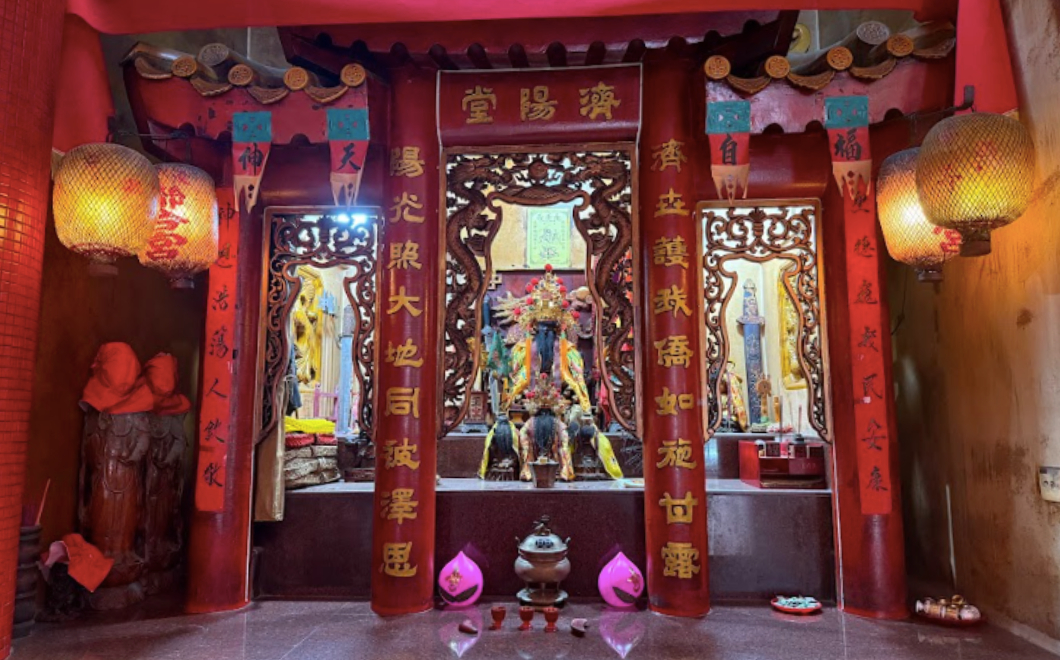
Ji Yang Tan
The Cai Fu Wang Ye (Lord Cai) deity originated from Xiamen’s Dadeng Village in Tong’an County, Fujian Province, during the Qing Dynasty, where he was venerated as the ancestral guardian deity.
Mr. Cai Hao, who migrated from Dadeng, Fujian, to Singapore to make a living, established the Cai Fu Wang Ye Altar in 1920 with funds collected from clan members. He commissioned the carving of the golden effigy of Lord Cai and enshrined it in a rented two-storey shophouse along Taylock Street (formerly known as Five Stone Street), dedicating the entire second floor as a temple hall.
Every year, on the 18th day of the 10th lunar month, devotees celebrated the Birthday of Lord Cai Fu Wang Ye with an opera performance as an offering of thanksgiving to the deity.
During this time, the altar also served as a rest home for newly arrived Cai clan members from China who had no relatives or acquaintances in Singapore, offering them temporary lodging and support.
Relocations and Rebuilding
In 1925, due to financial constraints, the altar was temporarily moved to Mr. Cai Hao’s residence at Zion Road, where the annual celebrations continued as usual.
In 1934, the altar relocated again to the third floor of a shophouse on Chang Tai Street (then known as Kaba Street). However, due to a shortage of funds, it moved once more in December 1935 to Pearl Street (also known as Tofu Street), managed by Mr. Cai Wenjie and Mr. Cai Duqi.
During the Japanese Occupation (1942), all temple activities ceased when Japanese forces invaded Singapore.
After the war ended, in 1947, Mr. Cai Wenjie and Mr. Cai Duqi resumed leadership and raised funds to rent the third floor of 105-B Amoy Street, renaming the temple Jiyang Tang (Hall of Benevolence). The tradition of celebrating the Birthday of Lord Cai Fu Wang Ye on the 18th day of the 10th lunar month was reinstated.
From 1950 to 1954, the temple was managed by Mr. Cai Wenjie and Mr. Cai Shuirou.
In 1953, the property owner, Yongchun Association, informed Jiyang Tang that the building would be redeveloped. The relocation was delayed until 1955, when the altar was moved to 103-A Amoy Street, occupying the entire second floor.
Following a clan meeting, Mr. Cai Rongjicheng was elected as the tenant representative, with Mr. Cai Hesong and Mr. Cai Wenjie overseeing management.
From 1958, the temple was managed by Mr. Cai Wenjie and Mr. Cai Ronggui; later, in 1968, by Mr. Cai Ronggui, Mr. Cai Shuizhi, and Mr. Cai Rongtian.
By 1985, Mr. Cai Jinshun took over as chairman and treasurer, assisted by Mr. Cai Jicheng and Mr. Cai Huozhi. The temple continued to hold annual celebrations with Taoist rites (qing jiao) and Teochew opera performances, generously sponsored each year by Mr. Cai Jinzhong.
Relocation to Tampines Combined Temple
In 1989, due to redevelopment of the Amoy Street area, Mr. Cai Jinshun, a respected elder and leader of the Cai clan, initiated a fundraising campaign to relocate Cai Fu Wang Ye to the Tampines Combined Temple.
His leadership and integrity earned the deep respect and support of all senior clan members, who responded enthusiastically. Collectively, they raised over ten thousand dollars, providing the financial foundation for the deity’s future enshrinement.
On 5 November 1991 (29th day of the 9th lunar month, Year of the Goat), Cai Fu Wang Ye, along with ten other temple deities, were solemnly enthroned at the Tampines Combined Temple. The procession, led by senior Taoist priests, featured grand rituals, festive drums, and jubilant celebrations — fulfilling the long-cherished wish of the Cai clan and marking a historic milestone of unity.
Temple Administration and Activities
Under the guidance of Chief Elder Cai Jinshun, together with Chairman Cai Jiahao and the temple committee, the administration of Jiyang Tang was orderly and well-coordinated.
Every year, on the 18th day of the 10th lunar month, the temple celebrates Cai Fu Wang Ye’s birthday with grand ceremonies, opera performances, and communal banquets — typically over ten tables — bringing together clan members, devotees, and friends from other affiliated temples of the Tampines Combined Temple.
The temple actively participates in the Combined Temple’s charitable efforts, including donations to dialysis centres, public hospitals, nursing funds, and other community welfare initiatives.
Through close cooperation, unity, and mutual support among all Tampines Combined Temple committees, Jiyang Tang has continued to prosper.
Its success is credited to the dedication and leadership of Elder Cai Jinshun, Chairman Cai Jiahao, and Advisor Cai Jicheng, as well as the collective devotion and harmony of all Cai clan members, who have worked tirelessly to uphold and expand the legacy of Jiyang Tang and the worship of Cai Fu Wang Ye.
Main Deity:
Temple Subcommittee:
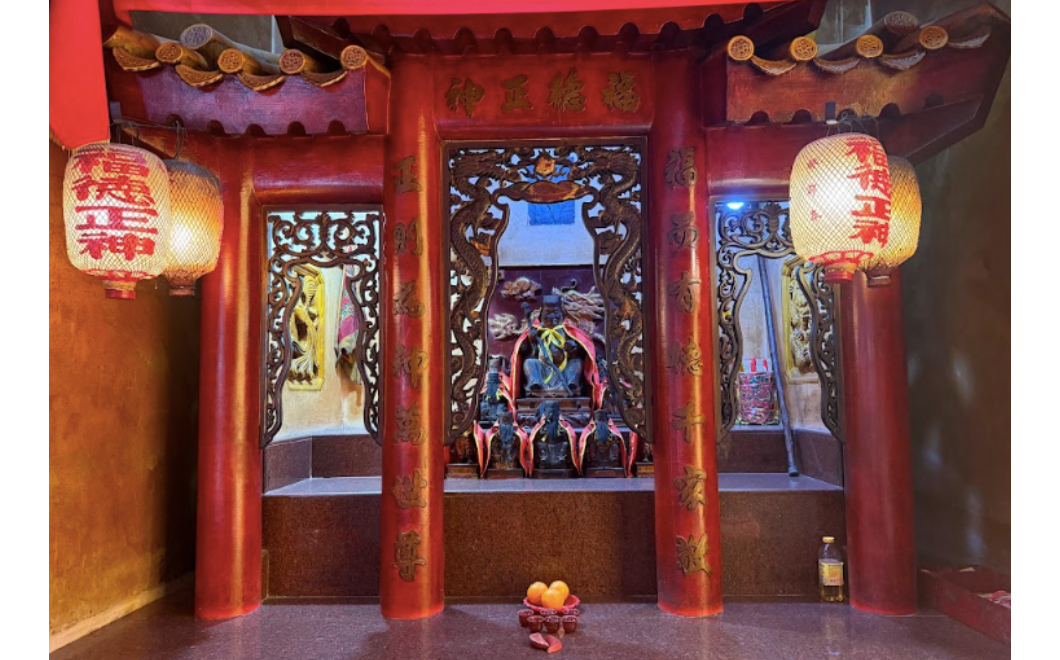
Fu De Zheng Shen
Introduction to Tua Pek Gong (Fu De Zheng Shen – The Earth Deity)
The Tua Pek Gong (Fu De Zheng Shen, or Earth Deity) enshrined at the Tampines Combined Temple originates from four temples that were relocated due to urban redevelopment plans —
namely, the Tampines 9½ Milestone Tua Pek Gong Temple, Sin Pah Tua Pek Gong Temple, Loyang Tua Pek Gong Temple, and Local Tua Pek Gong Temple.
All four temples were merged into the Tampines Combined Temple, and on 5 November 1991, the Tua Pek Gong deities were ceremonially consecrated and enshrined in their new temple home.
Tampines 9½ Milestone Tua Pek Gong Temple
The Tampines 9½ Milestone Tua Pek Gong Temple was originally located between the main Tampines road and the surrounding village. It was a modest attap-roof shrine, yet deeply revered by the local community.
Every year, devotees celebrated two major occasions — the Birthday of Tua Pek Gong on the 2nd day of the 2nd lunar month, and the Autumn Thanksgiving Festival on the 15th day of the 8th lunar month.
Despite its humble structure, the temple exuded solemnity and spiritual strength. During every celebration, villagers gathered to pay their respects and offer prayers for peace, safety, and prosperity under the protection of Tua Pek Gong.
Over the years, the temple’s incense offerings never ceased, and during every festival, the temple was filled with devotees and visitors, creating a lively and festive atmosphere.
Sin Pah Tua Pek Gong Temple
The Sin Pah Tua Pek Gong Temple was located at the junction of Sin Pah Road.
Built as a simple wooden structure during the early 1970s, the temple arose from the local villagers’ desire for protection. During that period, the Tampines area was heavily involved in sand excavation, and large lorries frequently passed by.
As traffic accidents occurred often, residents pooled their resources to build a temple to worship Tua Pek Gong, seeking his blessings for road safety, family harmony, and bountiful livelihoods.
Every year on the 15th day of the 8th lunar month, devotees held the Autumn Festival in gratitude to the deity, attracting continuous streams of worshippers. The celebrations were always vibrant and joyous.
Loyang Tua Pek Gong Temple
The Loyang Tua Pek Gong Temple was situated near the 12th Milestone of Tampines Road, by the roadside.
It was established in the early 1960s by local residents who constructed a wooden shrine. As the area later developed with factories and increased traffic, accidents became frequent, causing injury and loss of life.
To seek divine protection, the devotees erected the Tua Pek Gong Temple to bless and safeguard travellers and the community.
Each year on the 17th day of the 10th lunar month, a grand celebration was held for the deity’s Birthday Festival. Crowds of devotees gathered to pay homage, and the event became a major religious and community occasion, drawing many worshippers from near and far.
Local Tua Pek Gong Temple
The Local Tua Pek Gong Temple, also known as the Old Site Temple, was located near the 8th Milestone of Tampines Road.
It was built in the early 1970s by villagers who donated funds for its construction. The temple became a spiritual centre for the nearby residents.
Each year on the 15th day of the 8th lunar month, the temple held the Autumn Festival, during which devotees offered prayers and thanksgiving to Tua Pek Gong.
On the 17th day of the 10th lunar month, the temple hosted another major celebration for the deity’s birthday. The ceremonies were always grand, drawing large crowds and creating a lively atmosphere filled with reverence and festivity.
In December 1996, the Local Tua Pek Gong Temple was formally relocated and enshrined at the Tampines Combined Temple, uniting it with the other Tua Pek Gong deities under one sacred roof.
Main Deity:
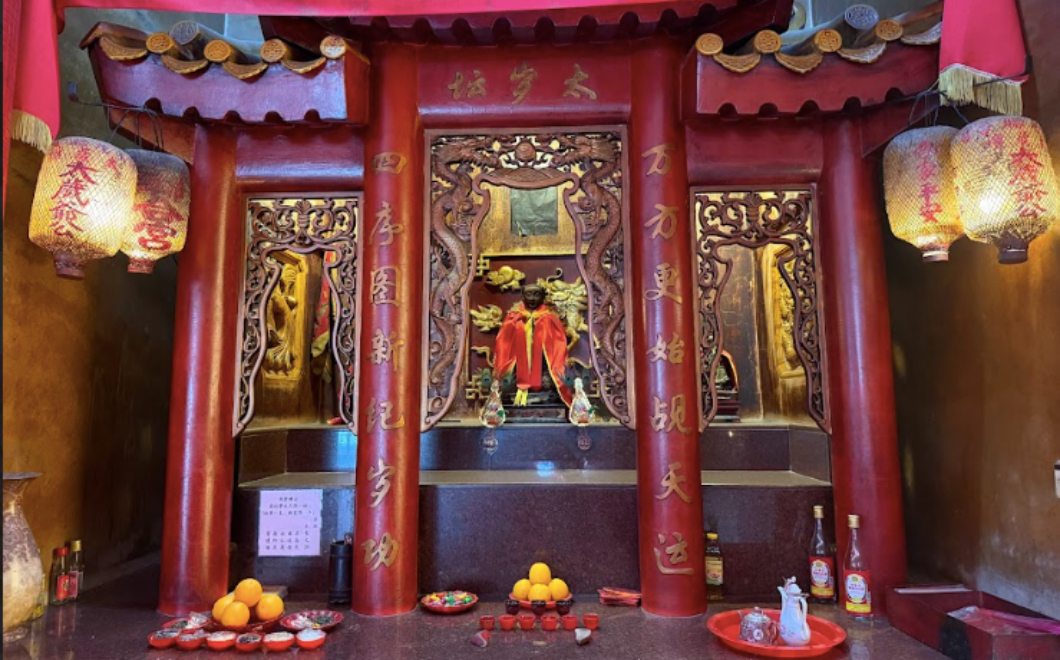
Tai Shui Dian
The Most Revered Sage and Teacher — Confucius
Birthday: 27th day of the 8th lunar month
Titles: Teacher for All Ages, Most Revered Sage, Master Kong, The Esteemed Father, The Great Sage and Teacher of the World, Kong Fu Zi, or Confucius.
Brief Biography
Confucius (Kong Zi) was born in the State of Lu during the Spring and Autumn Period. His given name was Qiu (丘), courtesy name Zhongni (仲尼). He was born in the 21st year of King Ling of Zhou (corresponding to the 27th day of the 8th lunar month).
He lost his father at a young age and grew up in poverty but demonstrated an extraordinary love for learning. He studied rites under Lao Dan (Laozi), music under Chang Hong, and mastered various arts under Shi Xiang, among others. Through his lifelong pursuit of knowledge and moral virtue, he became a great educator and moral philosopher, later venerated as the Sage of China.
Confucius founded the world’s earliest form of private education, advocating that “education should be available to all without discrimination” and that teaching should be tailored to each individual’s abilities — principles that remain foundational in Chinese education today.
He edited and compiled the Six Classics (Book of Songs, Book of History, Book of Rites, Book of Changes, Book of Music, and Spring and Autumn Annals), leaving behind a legacy that shaped Chinese civilization for more than two millennia.
Confucius is regarded as one of China’s greatest philosophers, educators, politicians, writers, social reformers, musicians, and calligraphers.
During a time of political turmoil in the State of Lu, Confucius travelled among the various kingdoms, spreading the ideals of virtue, ethics, and moral governance through both teaching and example.
He passed away in the year of Ji Xu (479 BCE), at the age of 73.
Posthumous Reverence and Titles
In ancient China, the tradition of honouring great teachers led to the establishment of state rituals in which Confucius was formally enshrined as the “Most Revered Sage and Teacher.”
During the reign of Emperor Ping of Han, he was first conferred the title “Lord Baocheng Xuanni.”
In the Wei dynasty, he was honoured as “Duke Shenghou,”
In the Sui dynasty as “Lord of Literature and Culture (Wenxuan Wang),”
And in the Tang dynasty as “Great Sage and Lord of Culture.”
In the Song dynasty, Emperor Zhenzong further elevated his title to “Great Accomplished Sage and Lord of Culture (Da Cheng Wen Xuan Wang).”
During the Ming dynasty, Emperor Jiajing honoured him as “Most Revered Sage and Teacher.”
In the Qing dynasty, Emperor Kangxi officially declared Confucius as “The Most Revered Sage and Teacher of All Ages (Zhi Sheng Xian Shi Kong Zi).”
Confucius continues to be revered throughout the world as the paragon of wisdom, virtue, and learning, whose teachings on morality, respect, and harmony form the foundation of Chinese civilization and moral thought.
Main Deity:
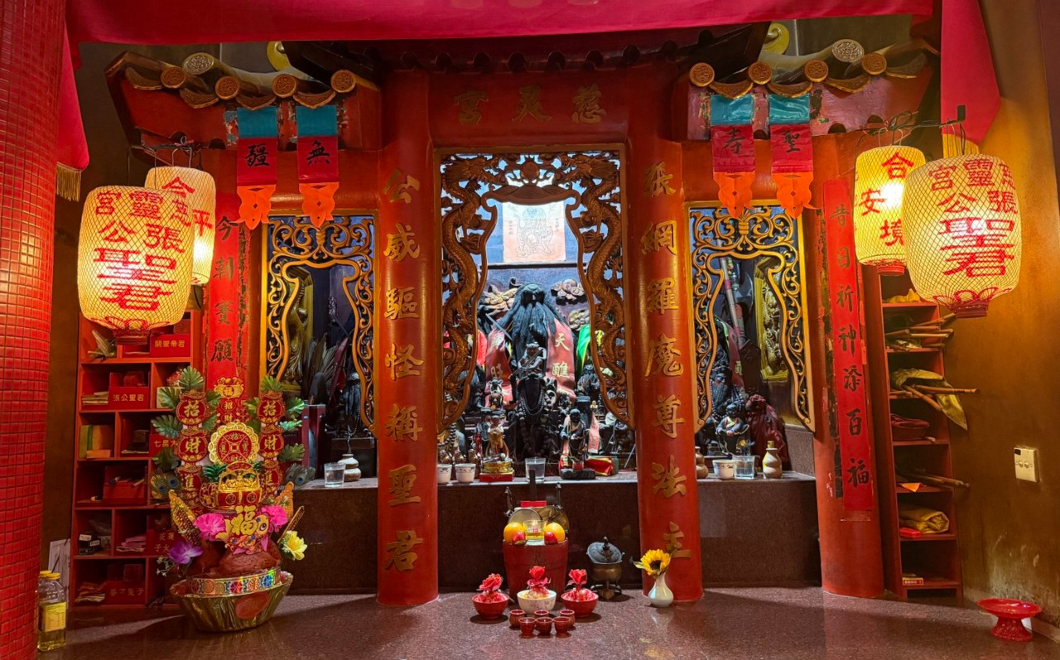
Ci Ling Gong
Introduction to Ciling Temple Ciling Temple has been established for more than twenty years. It venerates Zhang Gong Sheng Jun (Saint Zhang), Guan Di Sheng Jun (Saint Guan), the Seven Star Emperor, Xuantian Shangdi, the God of Wealth, and also pays homage to Bao Gong Da Ren and Da Er Ye Bo. The original temple was located in a zinc-roofed house in Kampong Jiutiao Shi, Tampines. The temple’s founder, Yao Lishen, driven by a spirit of compassion and a desire to help the people, initiated the establishment of Ciling Temple. Although it arose during the old social climate, it was built upon the kampong (village) spirit of sincerity, warmth, and unity. Every year on the 23rd day of the 7th lunar month, the temple celebrates the birthday of Saint Zhang Gong by hiring a Fujian opera troupe to perform opera shows for two to three days. The temple also distributes blessed items to devotees and conducts charity drives to support the needy. In 1981, due to government land acquisition, the temple had to relocate. In 1986, it was moved to a temporary site in Tampines. After the relocation, the celebration day was changed to the 23rd day of the 8th lunar month. Fundraising activities were often held through festive banquets, auctions of blessed items, and generous support from devotees to work toward the goal of building a joint permanent temple. Through the dedicated efforts of successive temple committees, the temple has also welcomed new members with a strong sense of service. With the energy and enthusiasm of the younger generation, temple activities have grown steadily and dynamically, entering a new era. At the same time, the temple actively contributes to charitable causes to help those in need.
Main Deity:
Temple Subcommittee:
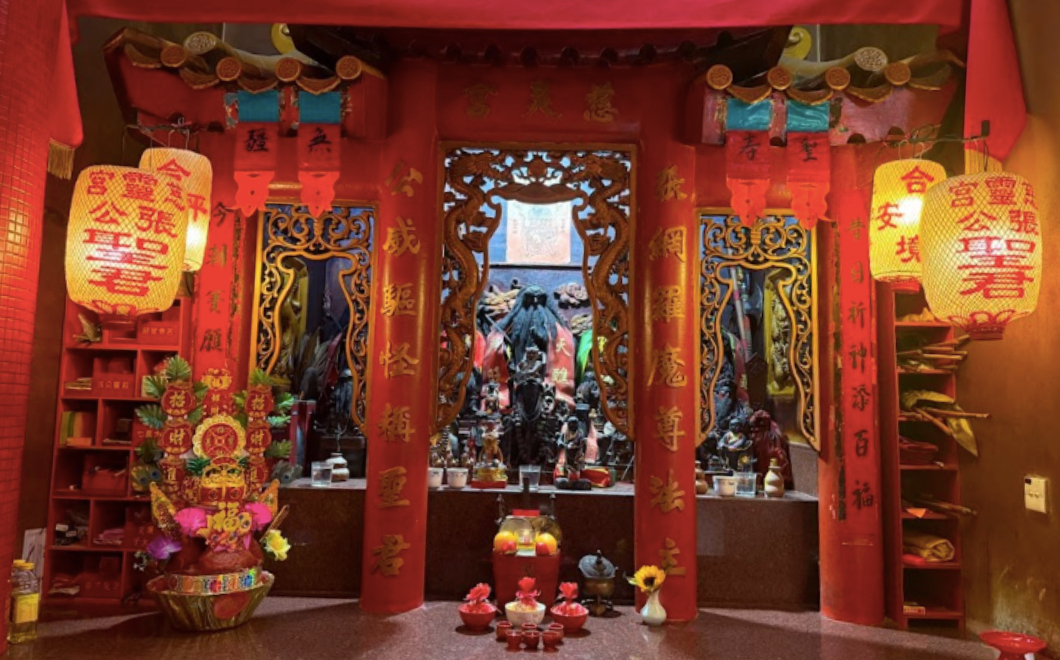
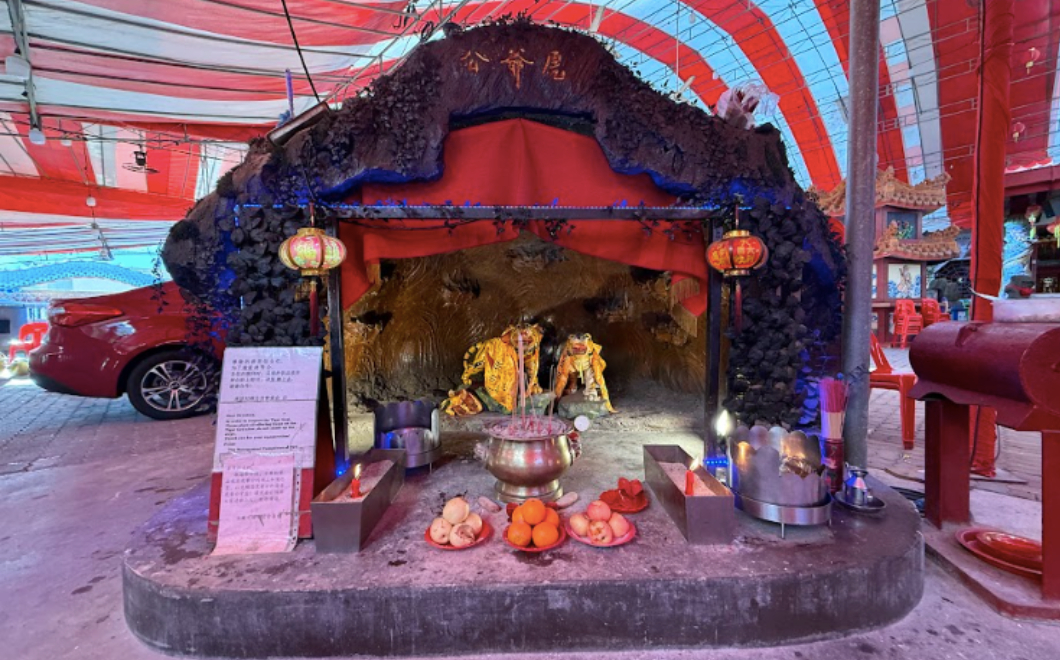
Five Generals of the Five Armies
Five Generals of the Five Armies (五军将)
The Five Generals of the Five Armies are deities commonly worshipped in various Taoist temples. They are known as the Five Army Camps, representing East, South, West, North, and Center, and are specifically tasked with protecting the temples and upholding divine law.
- Eastern Camp — Azure Dragon (Qinglong), Jia–Yi stems, corresponds to the Wood element in the Five Elements, associated with green.
- Southern Camp — Vermilion Bird (Zhuque), Bing–Ding stems, corresponds to Fire, associated with red.
- Western Camp — White Tiger (Baihu), Geng–Xin stems, corresponds to Metal, associated with white.
- Northern Camp — Black Tortoise (Xuanwu), Ren–Gui stems, corresponds to Water, associated with black.
- Central Camp — Yellow Dragon, Wu–Ji stems, corresponds to Earth, associated with yellow. Each camp has its own flag color corresponding to its element. Some temples, for decorative purposes, may not realize these flags also carry the hidden logic of the Five
Element cycle (Wu Xing).
- The correct cycle of generation: • East flag is green • South flag is red • Center flag is yellow • West flag is white • North flag is black. In some temples, the green (East) flag is mistakenly placed over yellow (Center), symbolizing Wood overcoming Earth, which disrupts the intended flow.
The Five Element system emphasizes generation (growth), not overcoming or weakening. The generative cycle of the Five Elements in the flags is as follows:
- East (green) over North (black): Water generates Wood. • South (red) over East (green): Wood generates Fire. • Center (yellow) over South (red): Fire generates Earth. • West (white) over Center (yellow): Earth generates Metal. • North (black) over West (white): Metal generates Water. When the Five Elements support one another, the energy prospers, symbolizing continuous growth and vitality. Each camp has one main general who issues commands, symbolizing the source of the Five Element cycle:
- Eastern Camp (Nine Kui Army) — General Lei Zhenzi, with 99,998 soldiers.
- Southern Camp (Lan Army) — General Nan Gong, with 88,888 soldiers.
- Central Camp (Three Qin Army) — General Nezha, with 33,333 soldiers.
- Western Camp (Six Rong Army) — General Yang Jian, with 66,666 soldiers.
- Northern Camp (Five Peaks Army) — General Yuan Hong, with 55,555 soldiers.
Main Deity: